Opinion · Dispatch №003
The meeting that could have been a paragraph.
A weekly architecture review I attended for two years. Six pages of decisions across 104 sessions. What it taught me about which meetings deserve to keep their hour.
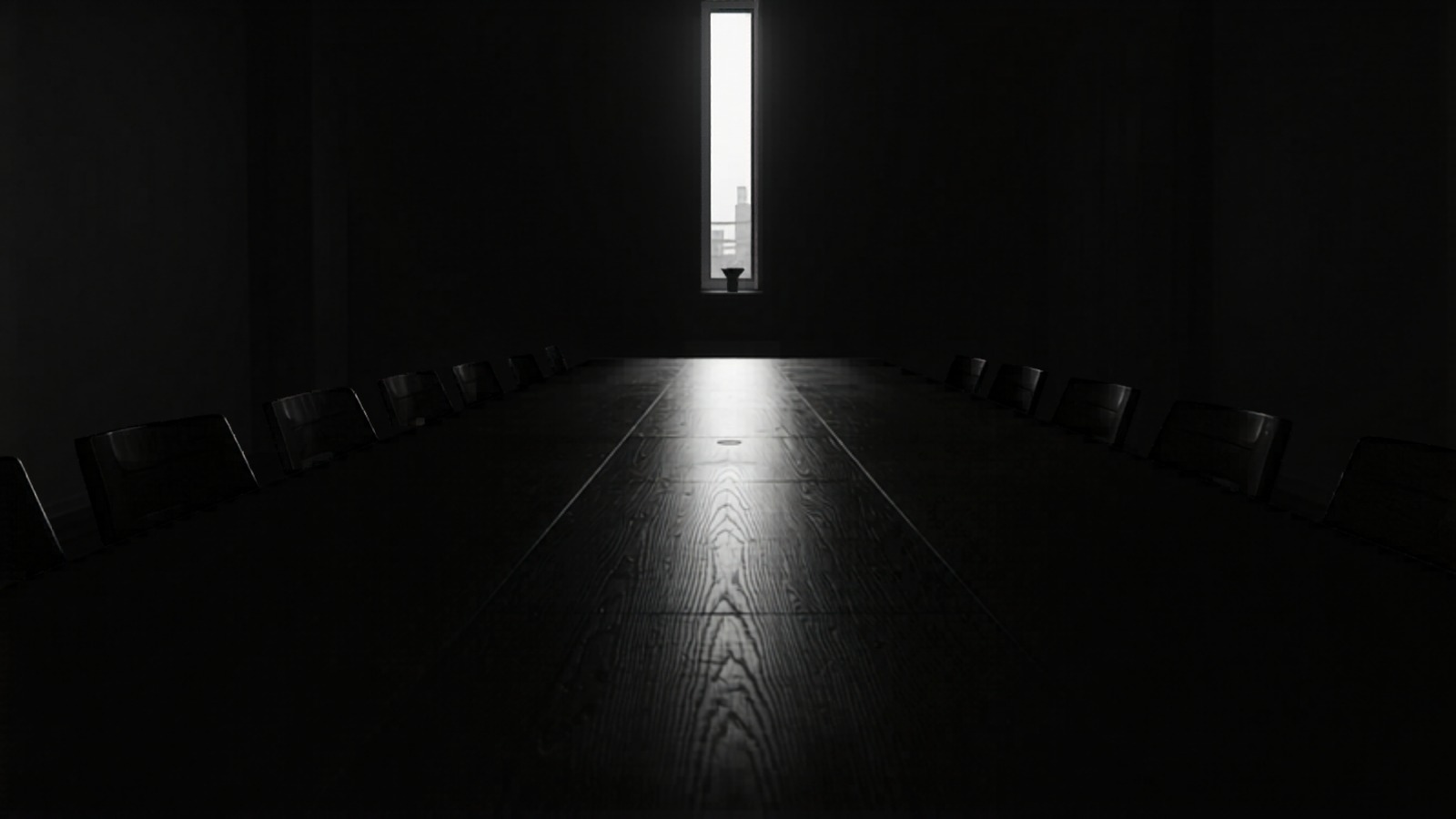
For two years I attended a weekly architecture review. One hour, every Thursday, twelve people in the room. I went 104 times.
When the programme ended, I asked the facilitator to send me the meeting notes. He did. Two PDFs, total. Six pages of decisions.
Six pages, across 104 hours, across twelve people. By rough arithmetic that is roughly one sentence of decision per ninety person-hours of attention.
I have thought about that ratio a lot.
The audit, not the autopsy
I want to be careful: the architecture review was not a bad meeting. It was a polite, well-run, technically literate meeting. The facilitator was excellent. The conversation was substantive. People left feeling heard.
The problem was not the quality of the conversation. The problem was the cost of the conversation, set against the decisions that came out.
If we had cancelled the meeting entirely and replaced it with a written async thread, my estimate is that we would have lost roughly the same six pages of decisions, and we would have saved roughly 1,200 person-hours over the same window. That is six person-months. For one team.
When the hour earns itself
I have come to use a small test for whether a recurring meeting should keep its slot.
A meeting earns its hour when, in any given session, at least one of the following is true:
- A decision is made in the meeting that would have taken at least an extra business day to converge on async.
- A trust-or-relationship-bearing interaction happens. A context-share between people who would not otherwise be in the same room.
- A live demo or live problem-solving event occurs that cannot be reasonably represented in writing.
If none of the three are happening, for three sessions in a row, the meeting has stopped paying its rent.
Most weekly recurring meetings I have attended in my career fail this test. Most weekly recurring meetings of any meaningful tenure are kept for reasons unrelated to the work being done: ritual, hierarchy, attendance theatre, sponsor reassurance.
The cost we don’t book
The reason this is hard to fix is that the cost of a meeting is paid by people other than the person who books it.
The PM books the slot. The engineer pays the time. The product manager books the steering. The team pays the prep.
Cost asymmetry of this shape always leads to inflation. It is why your calendar fills up.
What I have changed
I now do three things differently.
First: any meeting I am asked to add to a recurring cadence has to identify, in writing, which of the three criteria above it will reliably satisfy. If it cannot, the meeting goes on the calendar with a four-week expiry.
Second: if I am running a recurring meeting and I notice that three in a row failed the test, I either change the format or kill the meeting. I have killed three of my own in the last year.
Third: if I am invited to a meeting that fails the test in week one, I write back politely and say so. I am, on average, declined-with-good-grace once and accepted-with-relief twice for every three times I send the note.
None of this is novel. It is not even, particularly, my idea. But it is the only piece of programme-management practice I can point to that has measurably given me back time. Six person-months a year, by my reckoning.
The thursday architecture review, by the way, ran for two years. I attended 104 sessions. I miss the people. I do not miss the meeting.
Developed in the darkroom · Dispatch №003 · Fixed 24 Mar 2026
Comments
Loading...
Leave a comment
Thanks. Your comment is in.
This dispatch is open for letters
"A PMO ritual you secretly love, and the one you would burn tomorrow."
Next dispatch
Get the next frame as it develops.